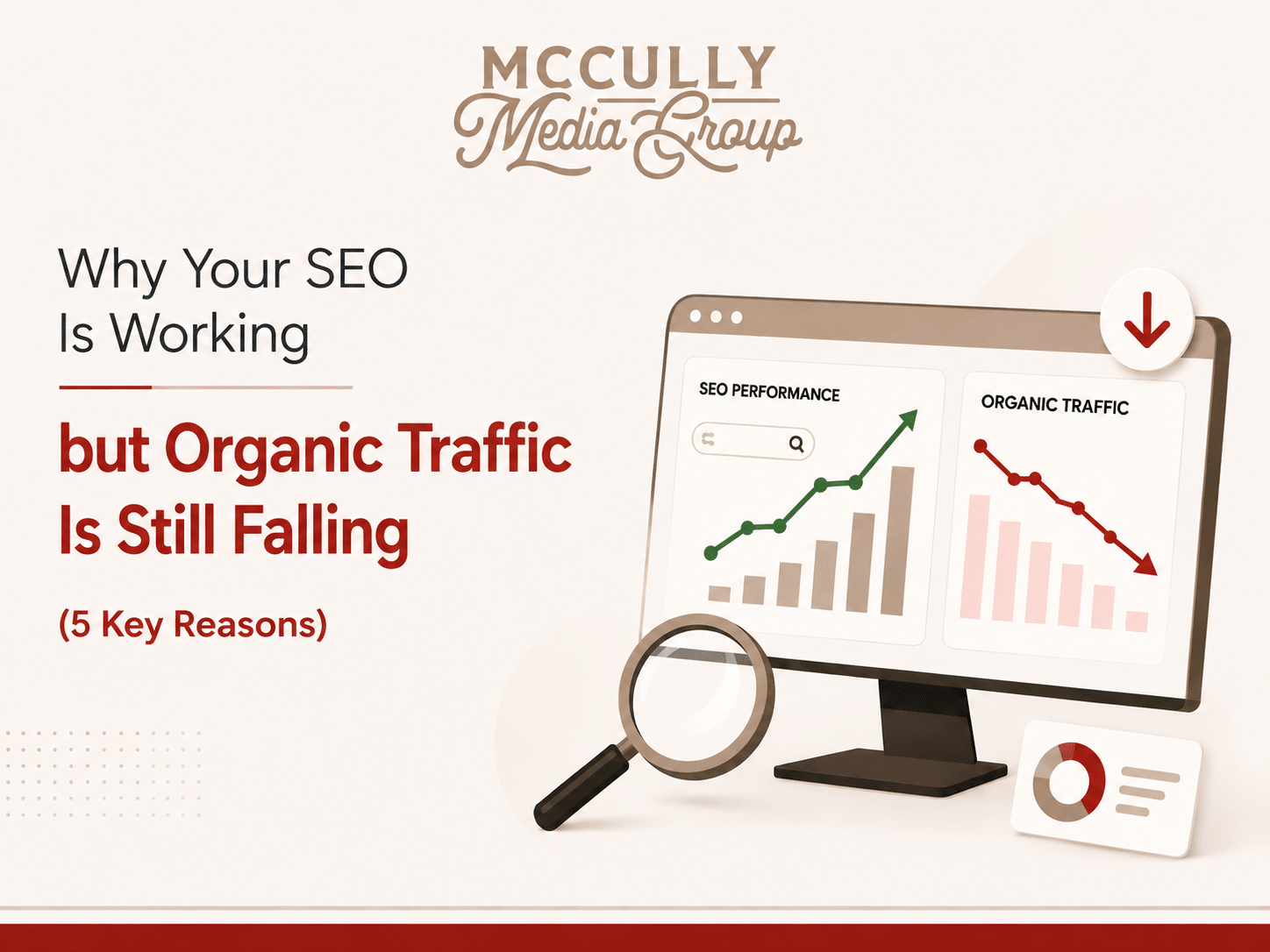

You’ve put real effort into your SEO. Your keywords are holding steady, maybe even climbing. Your reports look healthy across the board. So why does your analytics dashboard show organic traffic sliding month after month?
If that contradiction is keeping you up at night, you’re not alone. It’s one of the most common questions we hear from business owners investing in Fort Worth SEO. The good news is that a traffic drop rarely means your SEO stopped working. More often, the search landscape shifted while you weren’t looking, and your strategy needs to catch up.
Here are five reasons your rankings can stay strong while your organic traffic quietly falls, along with what you can do about each one.
1. Fewer People Are Searching for Your Keywords
Rankings and search demand are two different things. You can sit at the top of page one and still lose traffic if the number of people searching that term is shrinking.
This happens more than most owners realize. Search interest rises and falls with the seasons, with local trends, and with how people phrase what they want. A keyword that brought steady traffic last year might get searched far less often today, even though your position hasn’t moved an inch.
What to do
Look beyond rankings and check the search volume trends for your top keywords. If demand is fading, it’s time to target fresh terms your customers are actually typing into Google right now.
2. Zero-Click Results Are Answering Questions Before the Click
Google has changed how the results page looks. Featured snippets, “People Also Ask” boxes, local map packs, and AI-generated summaries now answer many searches without the user ever clicking a website.
So you can rank number one and still lose the visit. The searcher gets what they need on the results page and moves on. This is one of the biggest reasons behind an organic traffic drop that has nothing to do with where you rank.
What to do
- Target keywords that require a real visit to your site, like service comparisons, pricing questions, and “near me” searches.
- Structure your content to win featured snippets, so your brand stays visible even in zero-click results.
- Strengthen your Google Business Profile to capture local searches in the map pack.
3. You're Ranking for the Wrong Search Intent
Not all traffic is good traffic. If your pages rank for broad, high-volume terms that don’t match what your buyers actually want, you’ll see visits that never turn into calls or form fills. Worse, chasing those vanity keywords can pull attention away from the money terms that bring in real leads.
Search intent is everything. Someone searching “what is ceramic coating” is curious. Someone searching “ceramic coating near me” is ready to book. When your content drifts toward the first group and away from the second, your traffic and your revenue can move in opposite directions.
What to do
Audit your top pages and match each one to a clear stage of the buyer’s journey. At MMG, we build content around top, middle, and bottom-of-funnel intent so every page attracts the right visitor at the right moment.
4. Your Older Content Has Started to Decay
Content isn’t a “publish once and forget it” asset. Pages that ranked well two years ago can slowly slip as competitors publish fresher, deeper, more helpful articles. Google notices when information goes stale, and it quietly rewards the sites that keep their content current.
This slow slide is called content decay, and it’s easy to miss. Each page loses a little ground at a time, so nothing looks alarming until the combined loss finally shows up in your traffic numbers.
What to do
- Review your best-performing pages every few months.
- Update details, examples, and service information so they stay accurate.
- Add new sections that answer the questions your customers are asking today.
5. Technical and On-Page Issues Are Costing You Clicks
Sometimes the problem isn’t your rankings at all. It’s what happens around them. A weak title tag or a flat meta description gives searchers no reason to choose your listing over the one above or below it. Slow load times, broken pages, and indexing errors can also chip away at traffic while your keyword positions look fine on paper.
Google’s algorithm updates add another layer. Every refresh can reshuffle results, and pages that once skated by on thin content tend to feel it first.
What to do
- Write clear, compelling title tags and meta descriptions that earn the click.
- Check your site speed and fix pages that load slowly on mobile.
- Make sure every important page is indexed and free of technical errors.
Frequently Asked Questions
Yes, and it happens often. SEO health and traffic volume are not the same thing. Your keywords can hold strong positions while fewer people search those terms, or while more searchers get their answer right on the results page. The rankings look fine, but fewer visitors reach your site.
Some movement is normal, since traffic shifts with the season and buying cycles. The warning sign is a steady decline over several months or a sudden drop that lines up with a Google update or a change on your site. If it keeps sliding quarter after quarter, it is worth a closer look.
They can. When Google answers a question at the top of the page, many searchers never click through. The fix is to focus on searches that still require a visit, like “near me” queries, service pages, and pricing questions. Winning a featured snippet also keeps your brand visible on the results page.
Review your top-performing pages every three to six months. Refresh outdated details, answer new questions your customers are asking, and improve anything a competitor now covers better. Regular updates tell Google your content is current and help protect the rankings you have earned.
It depends on the cause. Fixing a title tag or technical error can show results in weeks, while recovering from content decay or an algorithm update usually takes a few months of steady work. The sooner you find the real reason, the sooner your traffic can climb again.
Ready to Stop Watching Your Traffic Slide?
A drop in organic traffic isn’t a signal to panic. It’s a signal to look closer. When you understand why the numbers are moving, you can respond with a clear plan instead of guesswork. The businesses that keep growing are the ones that treat SEO as an ongoing strategy, not a one-time project.
That’s exactly where we come in. Our team studies your audience, your competitors, and your search data, then builds a StoryBranded SEO strategy that matches real customer intent and keeps your content working long after it’s published. It’s part of the magnetic marketing plan we’ve built to help Fort Worth service businesses get found and grow.
If your traffic is heading the wrong direction and you’re ready for real answers, let’s talk. Schedule a strategy call with McCully Media Group today, and let’s stop guessing and start generating more calls, form fills, and booked appointments.